
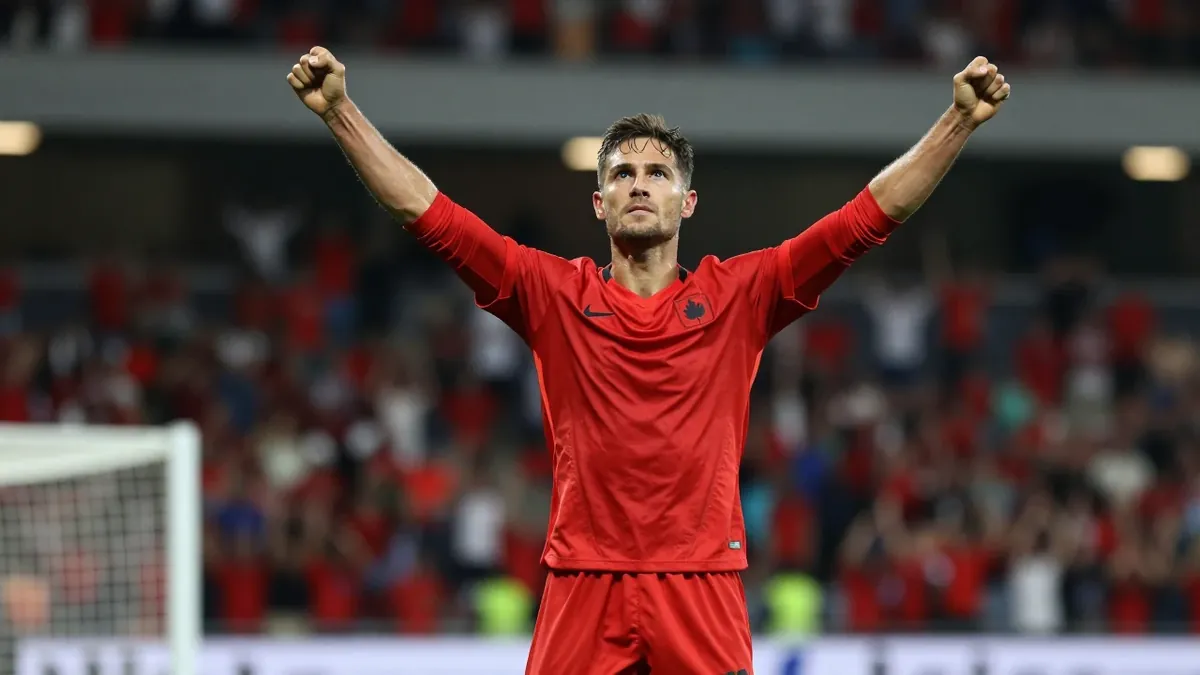
Canada's men's national soccer team concluded a historic 2026 FIFA World Cup campaign by reaching the round of 16. The team, co-hosting the tournament with the United States and Mexico, secured its first-ever World Cup victories before being eliminated by Morocco on July 4, 2026.
Canada entered the tournament ranked 30th in the world and played its opening match in Toronto on June 12. The team's journey included 13 total matches played on home soil, with seven in Vancouver and six in Toronto. This marked the first time Canada co-hosted the men's tournament, having previously hosted the 2015 FIFA Women's World Cup.
How did Canada perform in the tournament?
Canada's performance was a landmark for the program. The team won its first two games in men's World Cup history, a significant achievement that propelled them into the knockout stages. Their run ultimately ended with a 3-0 defeat to Morocco. The team's current form, as of late August 2026, stands at two wins, one draw, and two losses in their last five outings (LWLWD). They sit second in their World Cup group with 4 points from three games, having scored 8 goals and conceded 3 for a +5 goal difference. They trail group leaders Switzerland by three points. Fans can track the team's progress on our standings page.
What was unique about the 2026 World Cup?
The 2026 edition was the largest World Cup ever, expanding from 32 to 48 teams and 64 to 104 total matches. FIFA cited 'global inclusion' and economics as key reasons for the change. It was only the second multi-nation co-host after Japan and South Korea in 2002. The North American bid, featuring Canada, the U.S., and Mexico, defeated Morocco by a vote of 134–65 at the 68th FIFA Congress before the 2018 World Cup. The bid overcame global anti-American sentiment, and the U.S. Had previously lost the 2022 bid to Qatar. Morocco later joined with Portugal and Spain to win the 2030 hosting rights.
New player welfare measures were introduced, including a three-minute hydration break at the midpoint of each half. These breaks also generated significant advertising revenue; Fox reportedly made $250 million from the six extra minutes of ads per game. The official match ball was the Adidas Trionda.
What happened off the pitch during the event?
The tournament featured three separate opening ceremonies. Canada's ceremony in Toronto on June 12 included performances by Michael Bublé, Alessia Cara, Jessie Reyez, Nora Fatehi, Will Arnett, and William Prince. Alanis Morissette sang the national anthem. A notable off-field incident involved Ghanaian midfielder Thomas Partey, who was denied entry into Canada after his visa application was refused. Canadian authorities refused him because he claimed he had never been charged with a crime on his application. At the time, Partey had been charged with seven counts of rape and one count of sexual assault in England and was set for trial in 2027. The Ghanaian government called the ruling 'extremely unfair', stating the charges were 'unproven'. Ghana went on to defeat Panama 1–0 in Toronto on June 17.
What does the future hold for Canadian soccer?
The federal government committed $9.8 million to the Canada Soccer National Training Centre around the time of the World Cup, signaling investment in the program's future. Head coach Jesse Marsch praised the team's spirit after their historic wins, saying, "You guys are Canadian heroes … You should be so proud of who you are." The team's next challenge is a home fixture against Chile on September 26, 2026. Supporters can view the upcoming schedule on our fixtures page. With a solid foundation built from this World Cup experience, the focus now shifts to sustained development and future competitions.